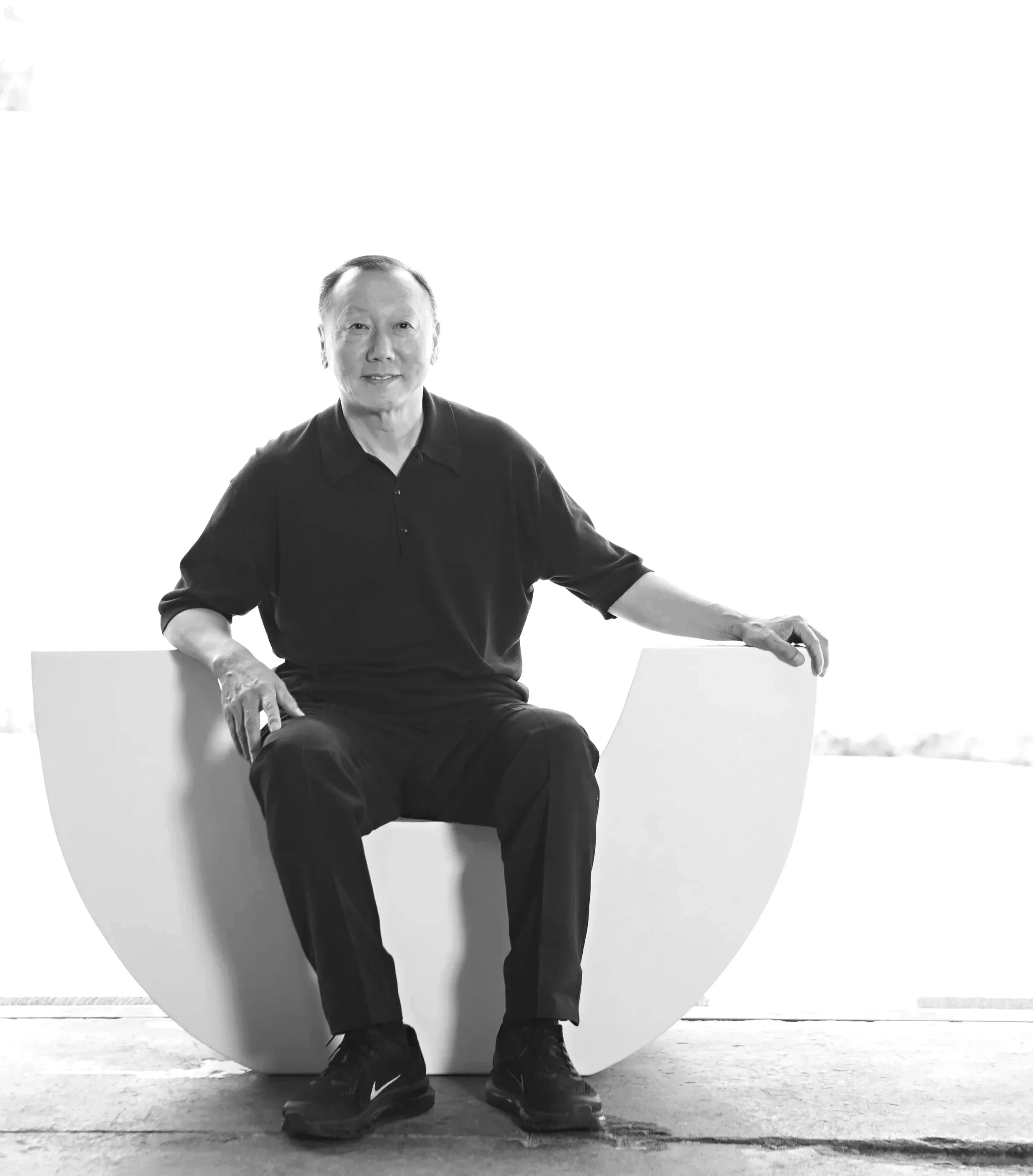
Robert Kuo’s work bridges ancient Chinese traditions and 21st-century design. Born in Beijing, he moved with his family to Taiwan in 1947. Raised in an artistic household—his father was an art professor and master of Chinese watercolor—Kuo was immersed in the decorative arts from an early age. His father established a cloisonné atelier, where Kuo began apprenticing at just fifteen. Although he never pursued formal art studies, he developed deep technical expertise through hands-on training, mastering the fundamentals that would shape his lifelong artistic practice.
While continuing his studies in Taipei, Kuo assisted in the family’s cloisonné studio, refining both his craftsmanship and creative vision. After visiting the United States in 1973, he immigrated to California and opened his first showroom in Beverly Hills. Drawing inspiration from Art Nouveau and Art Deco, Kuo introduced new forms, finishes, and sculptural objects to the traditional cloisonné medium, cultivating a discerning clientele who appreciated the way he made Chinese heritage accessible to contemporary audiences.
During this period, the Smithsonian’s National Museum of Asian Art acquired his celebrated Goldfish Bowl, recognized for its vitality and naturalism. In 1984, Kuo built an airy, contemporary gallery in West Hollywood, directly across from the Pacific Design Center at Melrose Avenue and San Vicente Boulevard. Situated in the West Hollywood Avenues of Art & Design, the Kuo Gallery quickly became a destination for designers seeking distinctive decorative objects for their most refined projects. He later expanded to New York City (2007–2019), and in 2020 established his current studio and showroom on West Jefferson Boulevard in Los Angeles, which now serves as the permanent home of Robert Kuo.
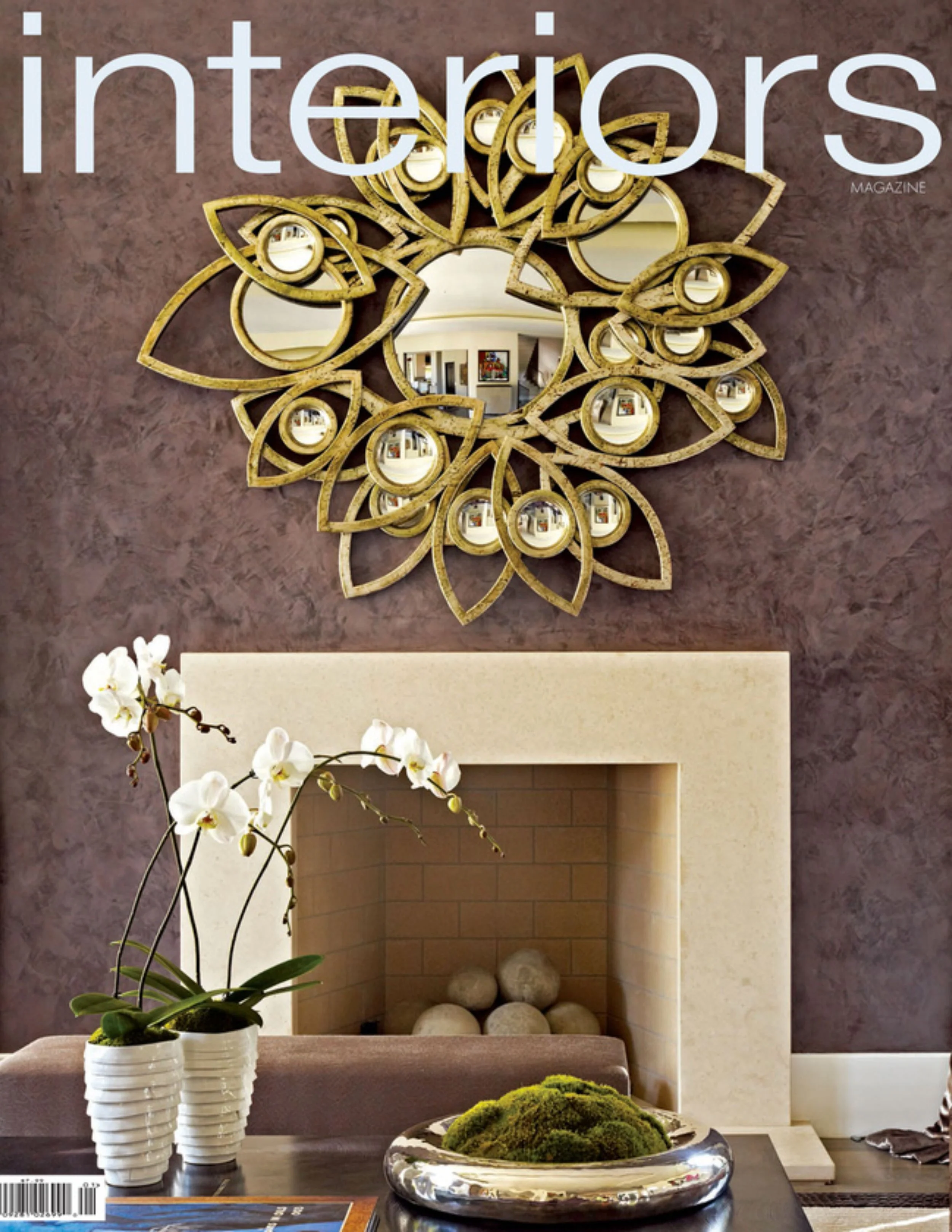
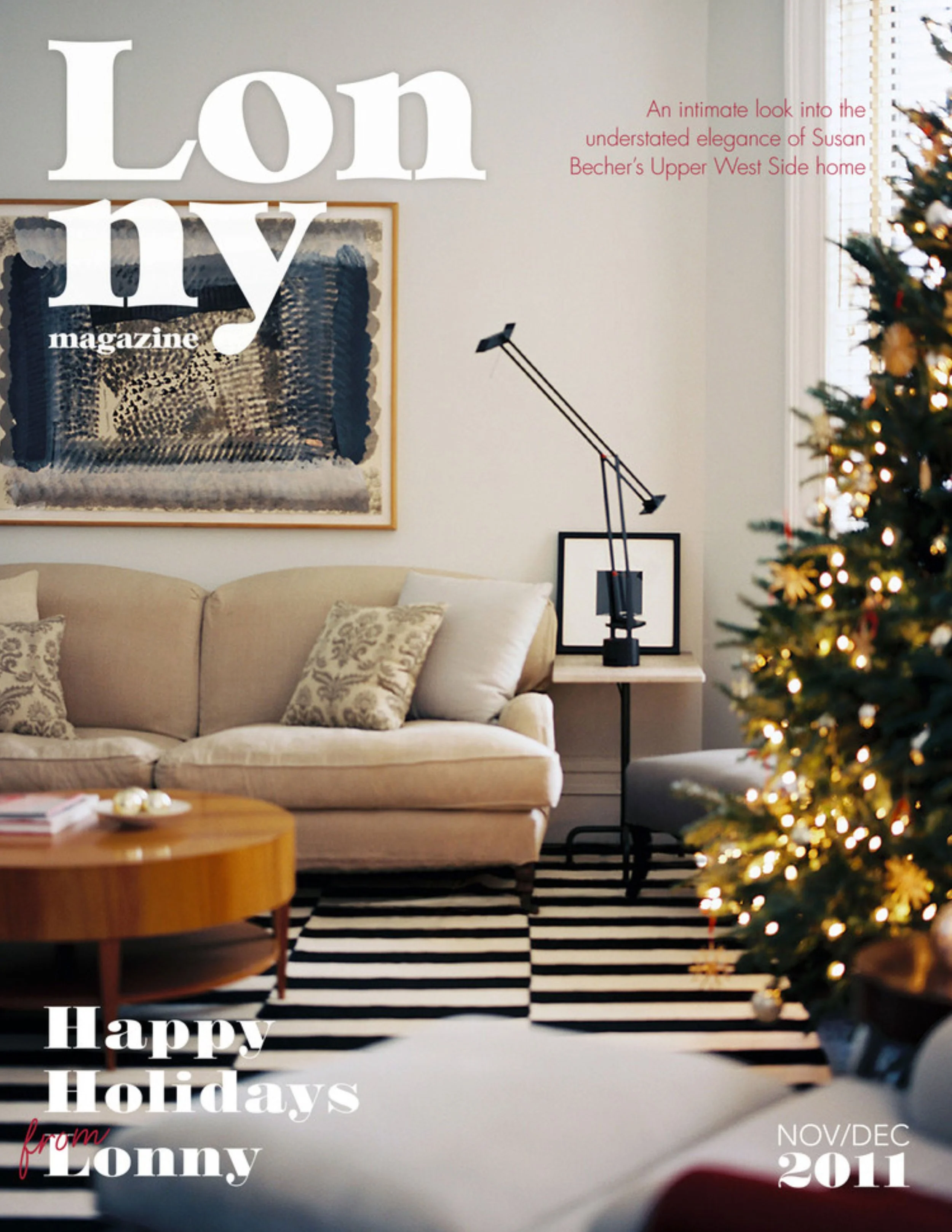
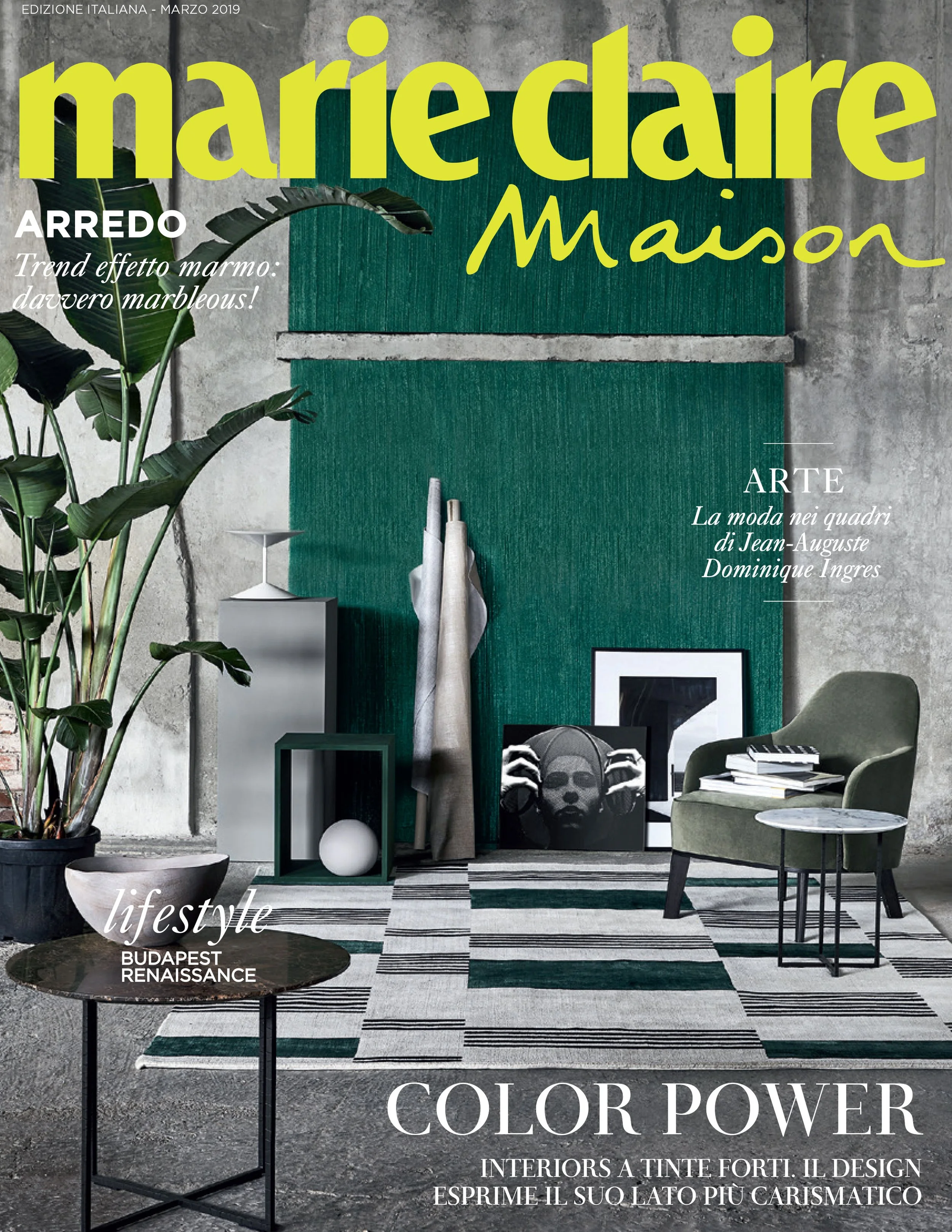
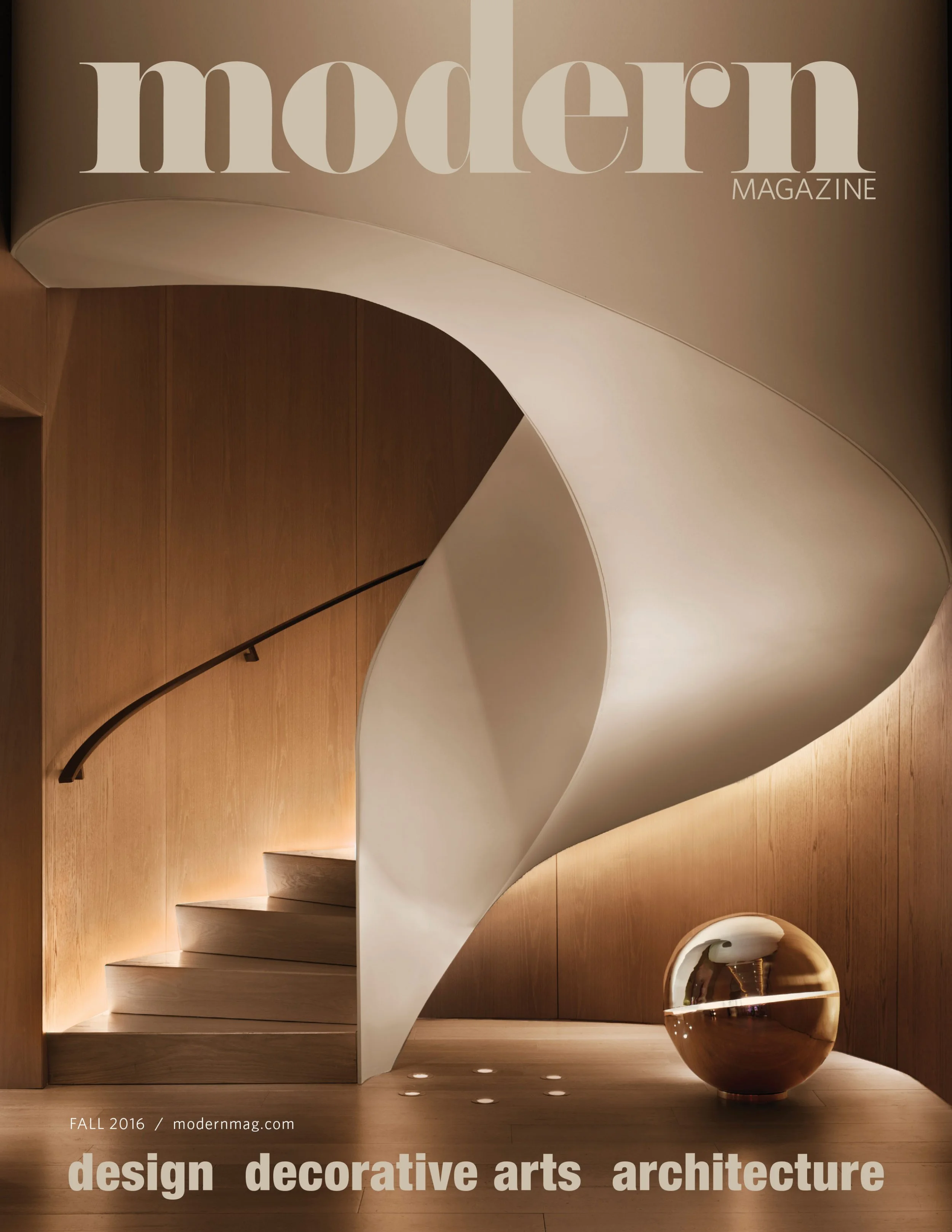
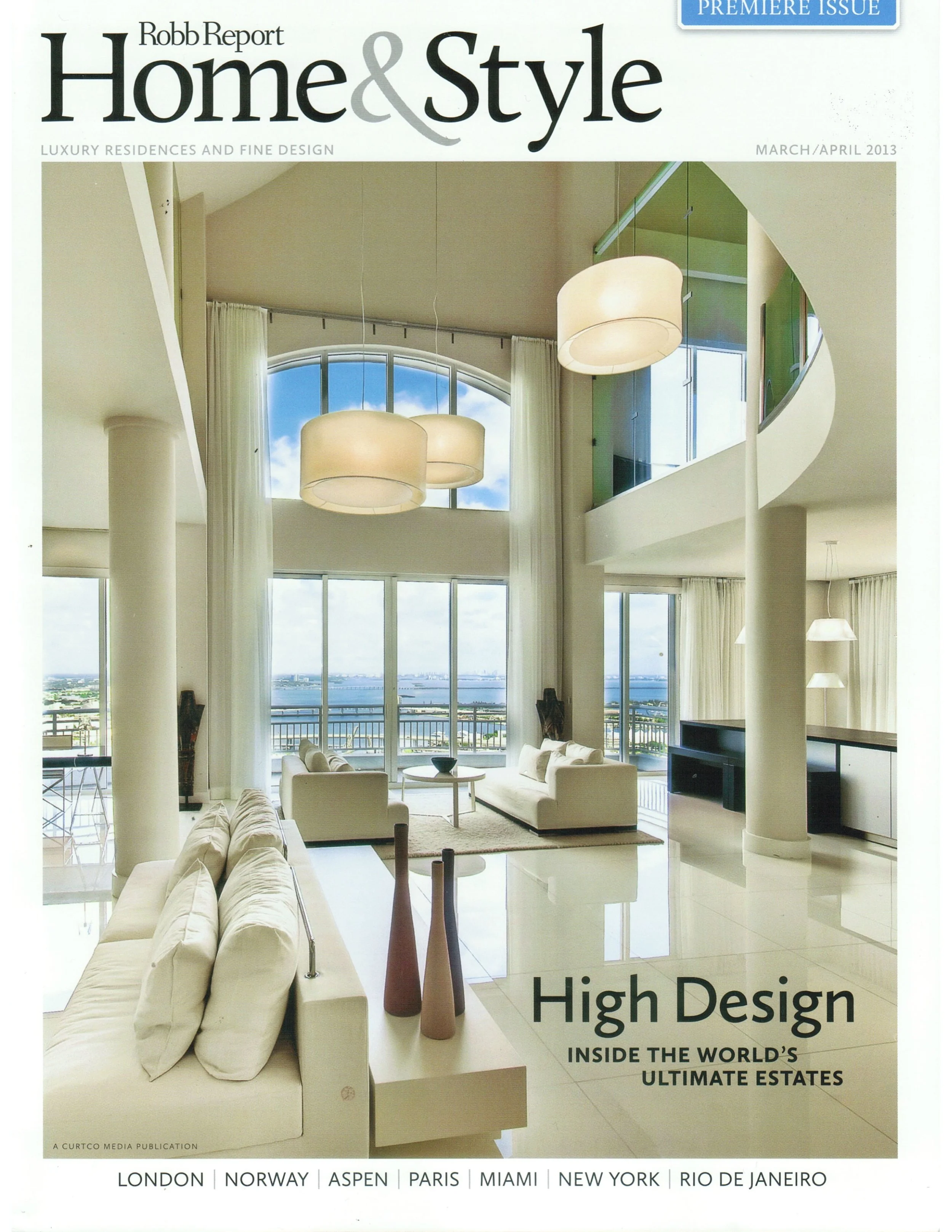
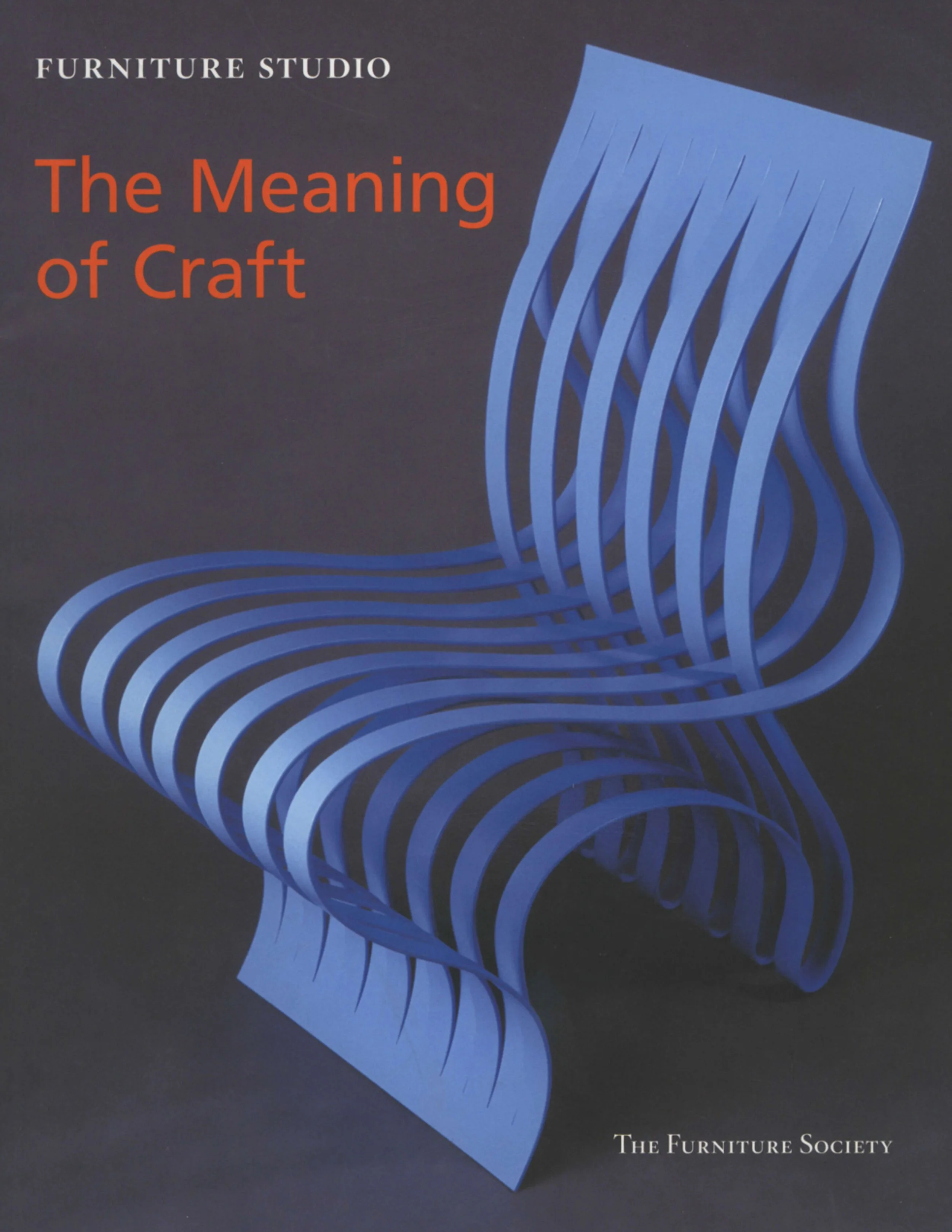
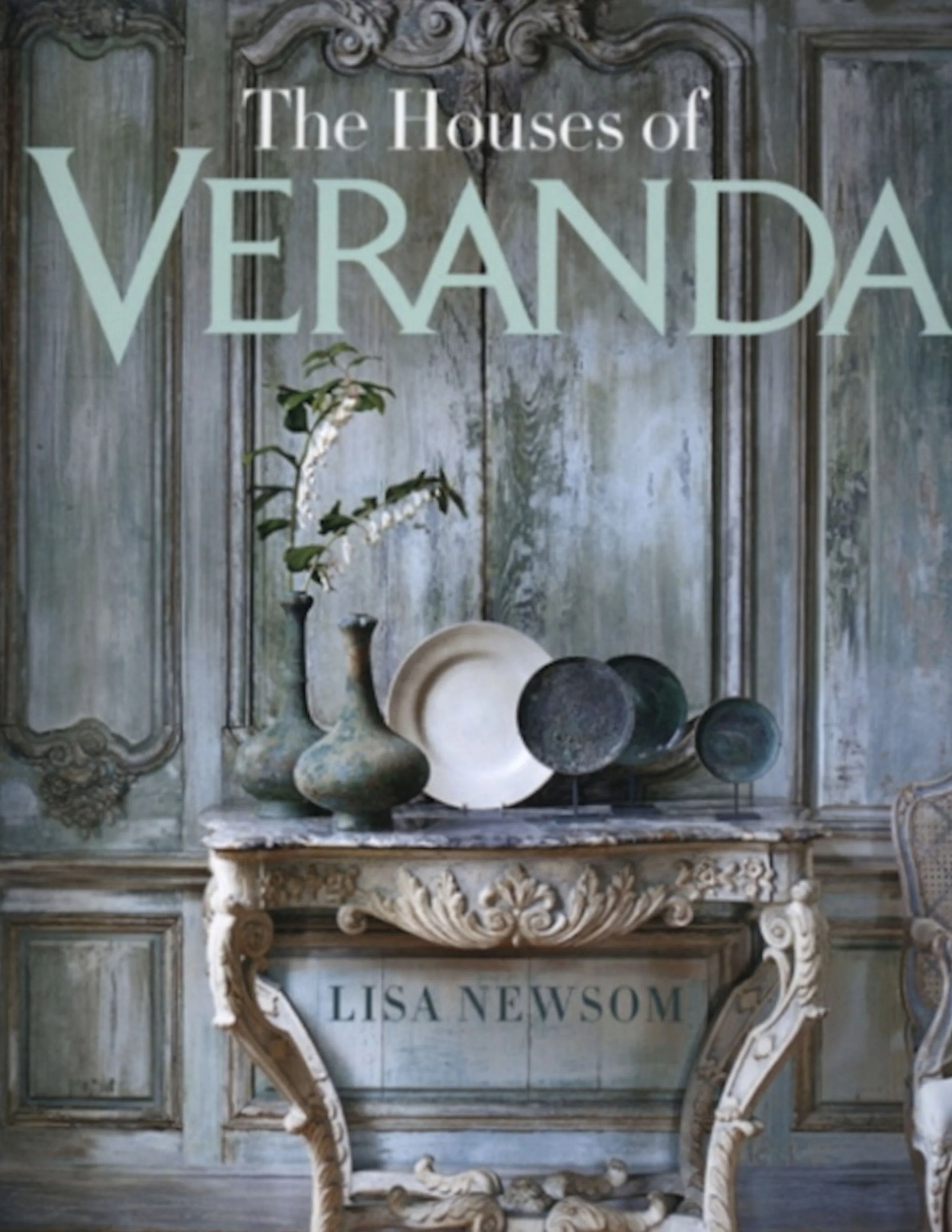
With each new chapter, his collections evolved, embracing modern and contemporary sensibilities while remaining grounded in traditional craftsmanship. His works can be found worldwide, from the National Museum of History in Taipei to exclusive hotels and private collections across the globe, and have been featured in leading design, lifestyle, and architectural publications.
Inspired by organic forms in nature as well as the timeless motifs of the Han and Ming dynasties, Kuo often blends these historical references with Art Deco and Art Nouveau influences. Dubbed “the imperial craftsman of the 21st century,” he reinterprets the past for the present and future, creating collectible design that resonates with devoted collectors eagerly awaiting each new release.
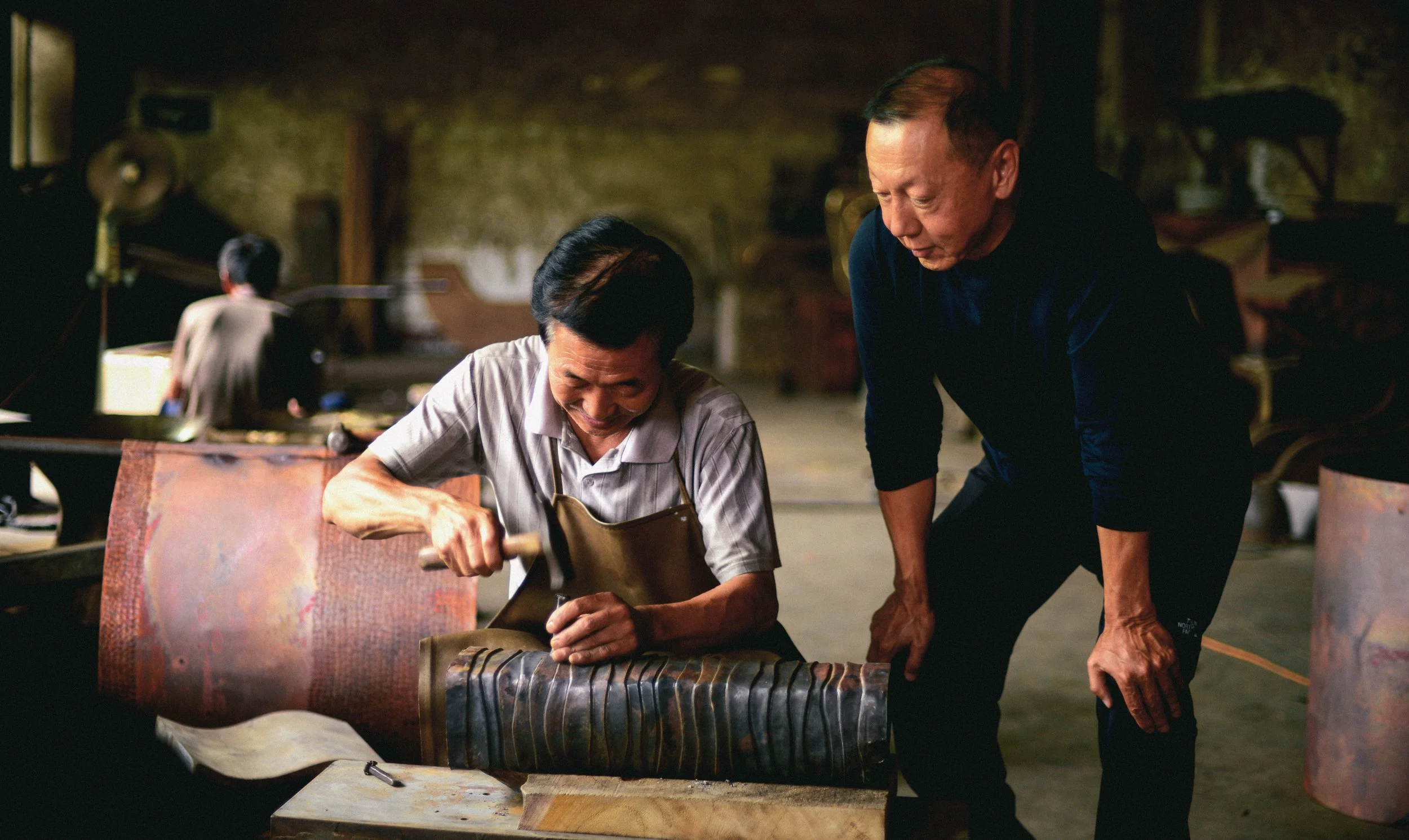
In 1985, Kuo shifted his focus from cloisonné to repoussé—the ancient art of hammering decorative relief into metal. Moving away from enamel on copper, he began experimenting with richly layered finishes applied directly to hammered surfaces. Seeking mastery of time-honored techniques, Kuo collaborated with artisans in China, training craftsmen to adapt traditional skills to his evolving forms and objects.
At the heart of his practice is a deep reverence for technique. Kuo collects and revives ancient crafts much as he collects antiques—patiently, passionately, and with discernment. One by one, he reinvigorates these traditions through his distinct design sensibility, pushing each material and method to its limits. The result is work that feels both ancient and new—honoring history while offering a fresh perspective on what is possible.
Renowned for bridging ancient craftsmanship with a distinctly modern aesthetic, artist Robert Kuo transforms historic East Asian decorative arts into striking contemporary masterpieces. Rather than simply replicating antiquity, Kuo masterfully manipulates labor-intensive, centuries-old techniques—such as the hammering of repoussé, the layering of Peking glass, the precision of multi-layered lacquerwork, and the intricate cell-firing of cloisonné. By pushing the physical boundaries of these mediums through innovative material combinations, patented matte color palettes, and unexpected organic forms, he breathes new life into ancestral traditions. The resulting collection features unique, sculptural pieces that honor the rigorous technical heritage of imperial workshops while projecting a bold, sophisticated, and thoroughly modern attitude.
Repousse /reh-pu-say/ & Chasing:
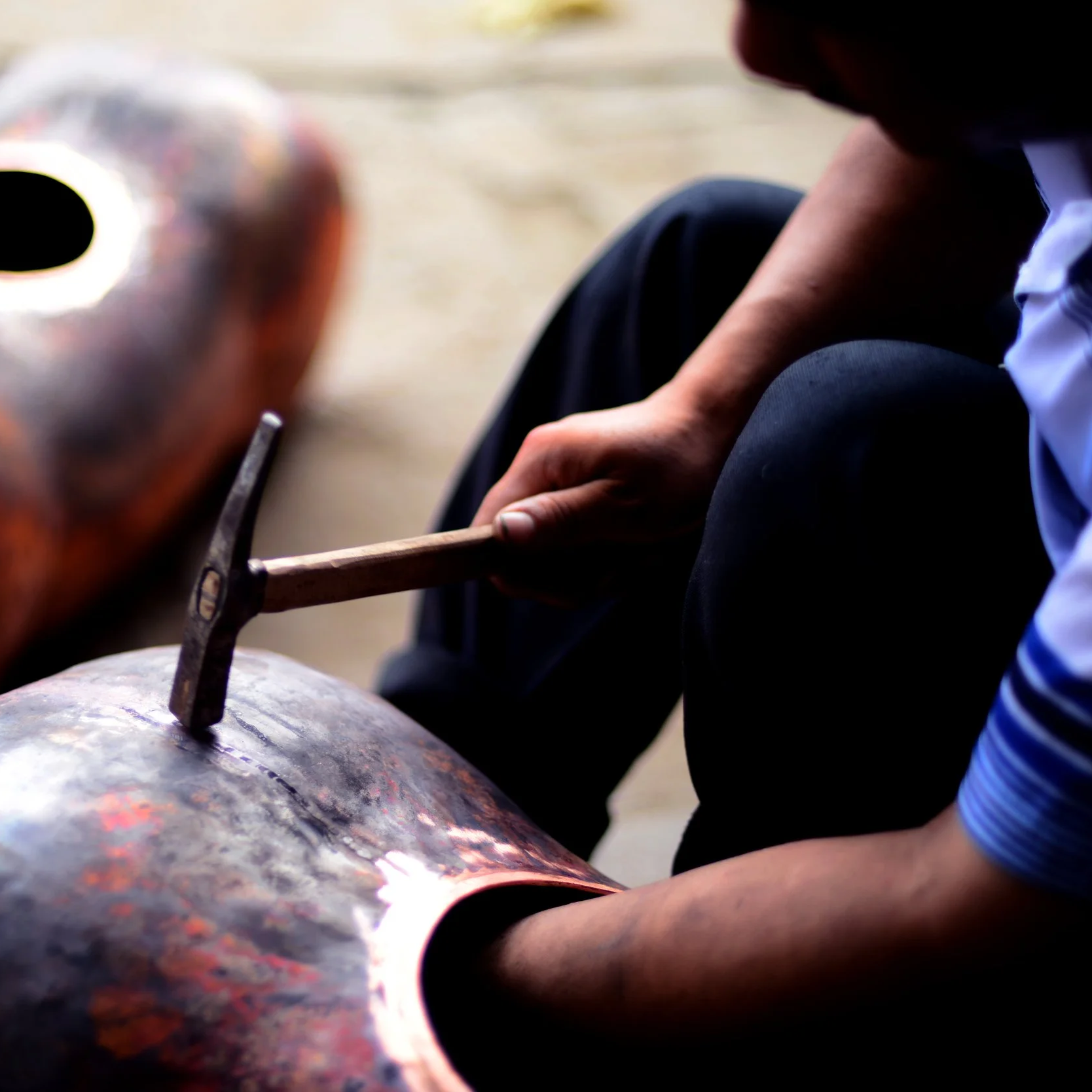
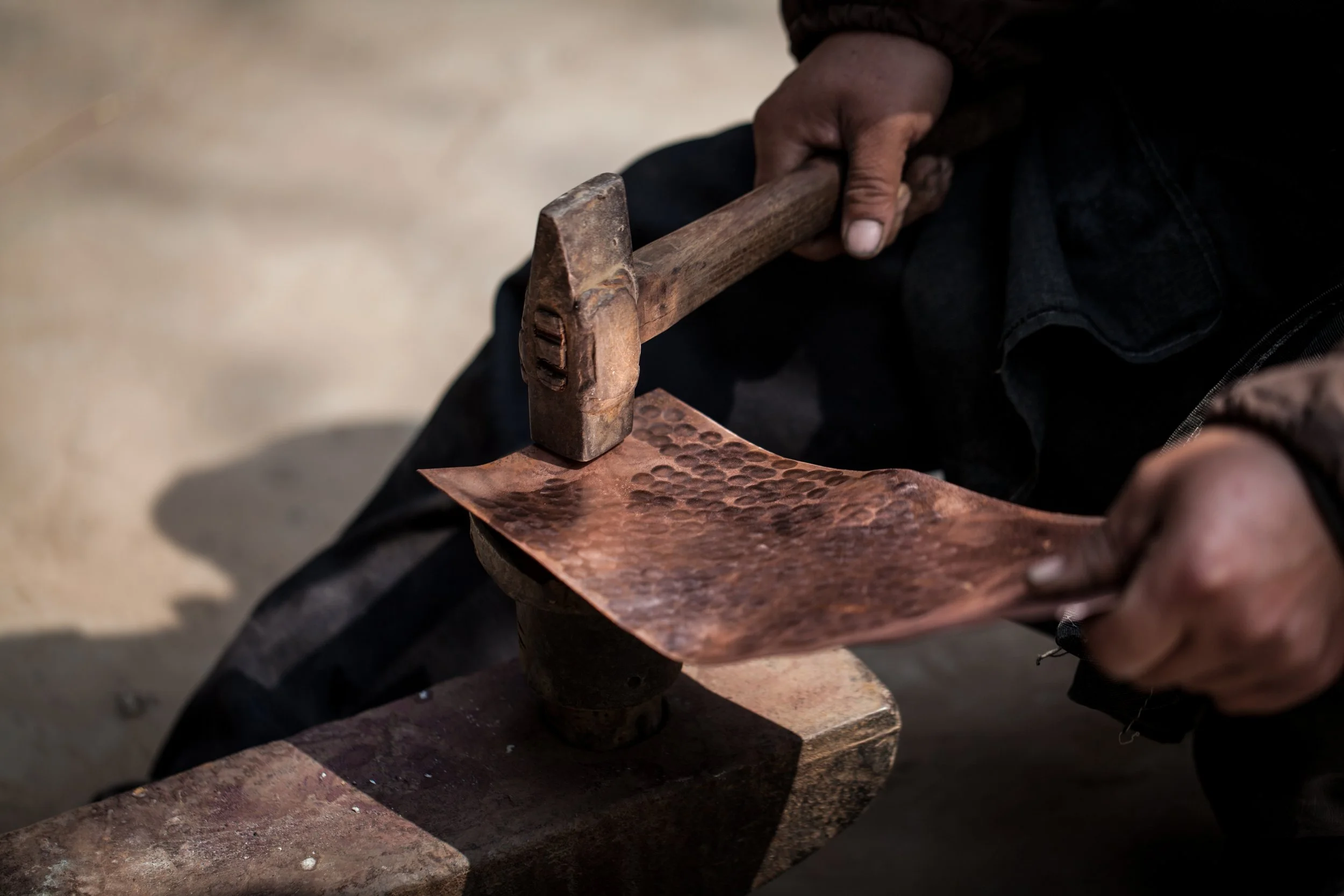
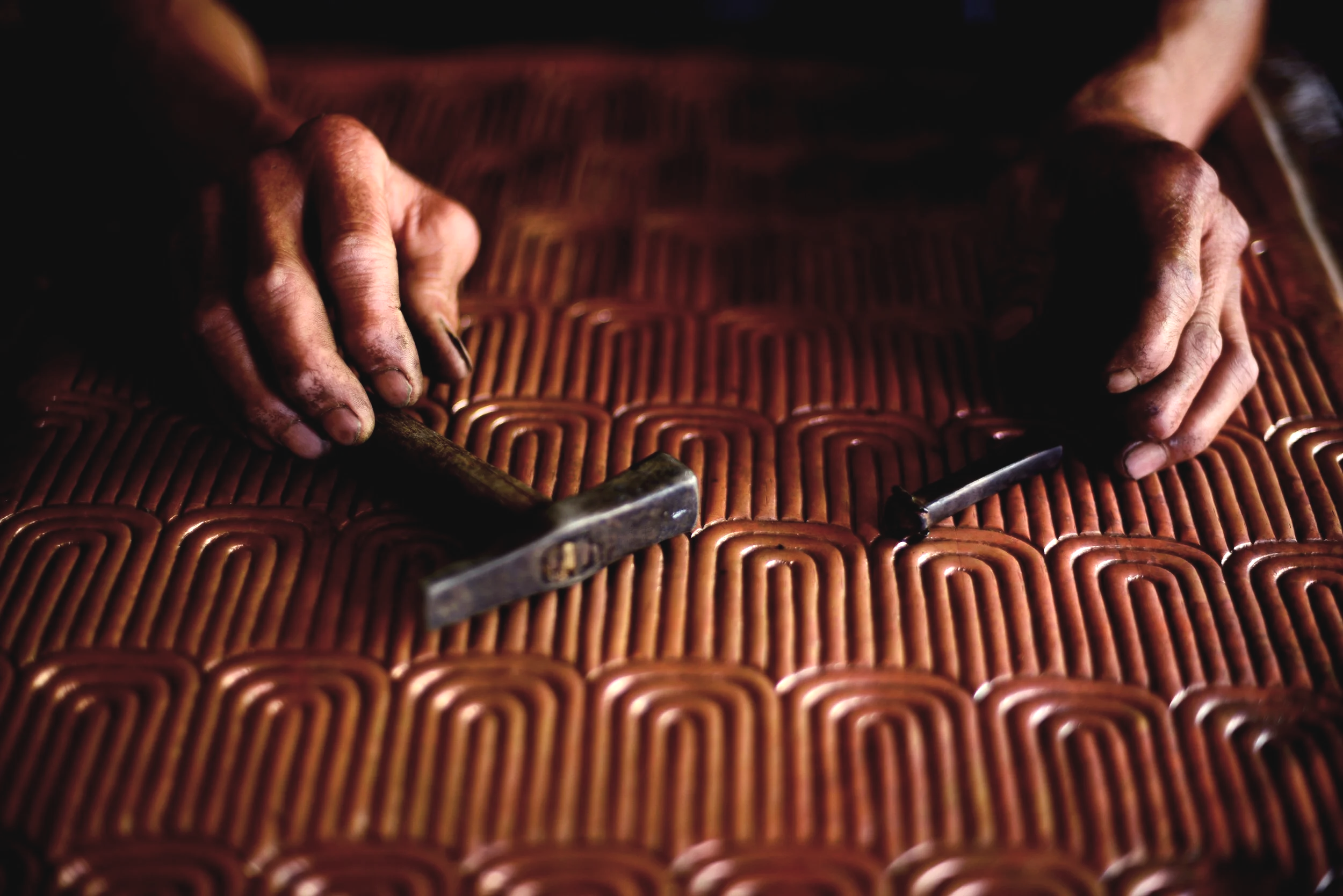
Repoussé is the traditional art of hand-hammering decorative, high-relief designs onto sheet metal. Originating around 800 B.C. between Asia and Europe, the technique emerged in China as early as the Han Dynasty (206 B.C.–A.D. 220). To achieve this intricate dimensionality, the metalsmith works fluidly from both sides of the sheet metal using specialized hammers and shaping tools. Raised sections in relief are meticulously pushed out from the interior surface, while concave, recessed details are driven in from the exterior. Throughout this intensive process, a malleable, putty-like material called "pitch" is placed inside hollow vessels or beneath the sheet metal to securely anchor the piece. This pitch acts as a crucial shock absorber, dampening heavy hammer blows and providing the exact amount of resistance needed to execute fine lines without puncturing the metal.
Hand-chasing is utilized in tandem with repoussé to sharply define, refine, and accentuate the final design. The craftsman initiates the chasing process by striking precise mallet blows at the center of the sheet and systematically moving outward toward the edges, carefully avoiding striking the exact same location twice. While chasing reshapes and contours the metal without changing its inherent composition, the repeated impact work-hardens the material, causing it to lose its plasticity. To keep the metal cooperative, it must be periodically heated (annealed) and reworked until the piece reaches its perfectly formed, sculptural completion.
Repoussé serves as the vital foundation for the vast majority of Robert Kuo's metalwork collection. Because this ancient hand-hammering technique manipulates thin sheet metal into sculptural forms rather than casting solid material, it creates inherently hollow structures. This lightweight, hollow nature grants Kuo immense artistic freedom to play with dramatic scales and bold, sweeping dimensions—allowing him the freedom to create commanding statement pieces unburdened by excessive weight.
Peking Glass:
Peking glass refers to the high-quality glass art originally produced by imperial and commercial workshops in Beijing during the Qing Dynasty (1644–1911), a heritage that has since become synonymous with the fine tradition of Chinese glassmaking.
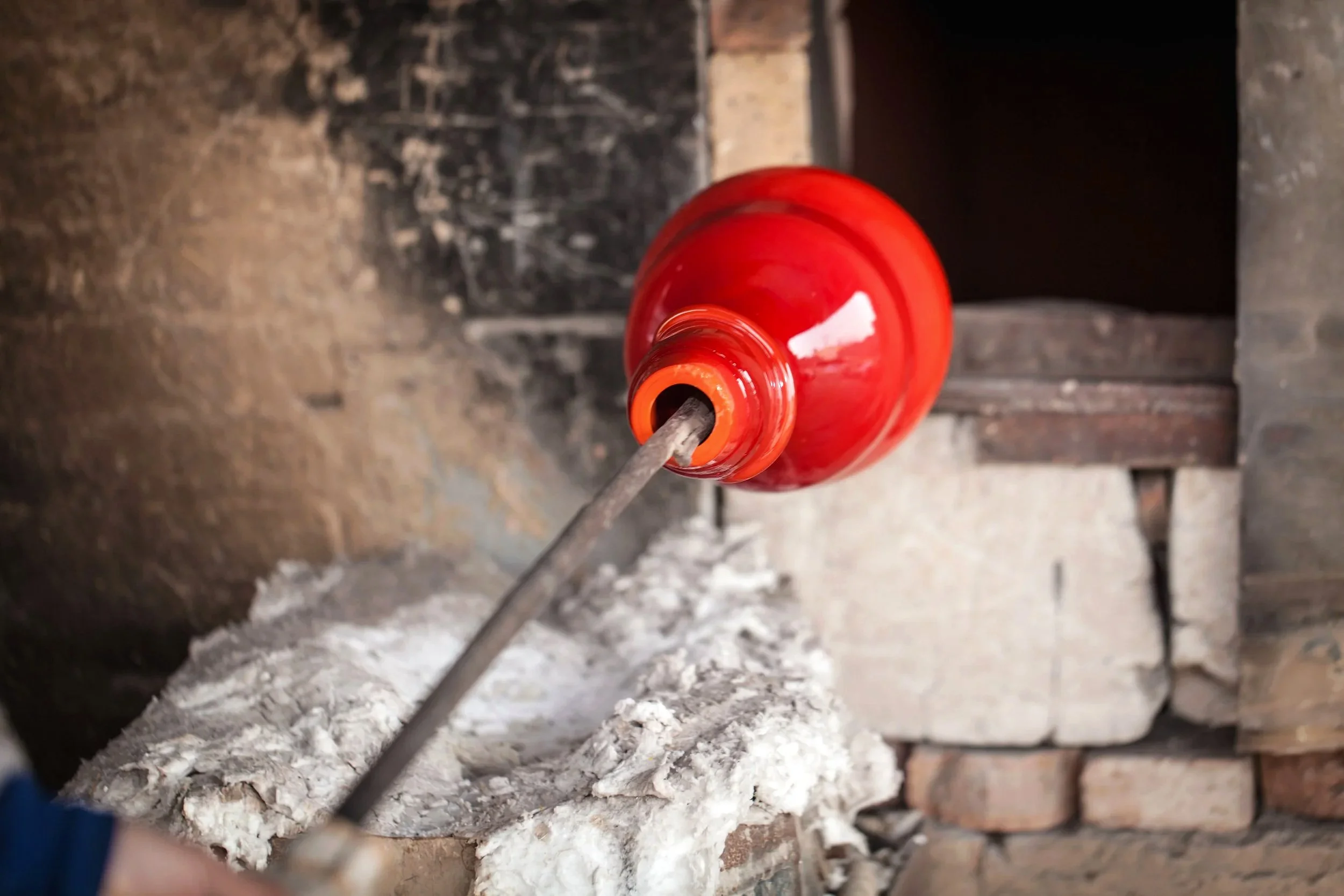
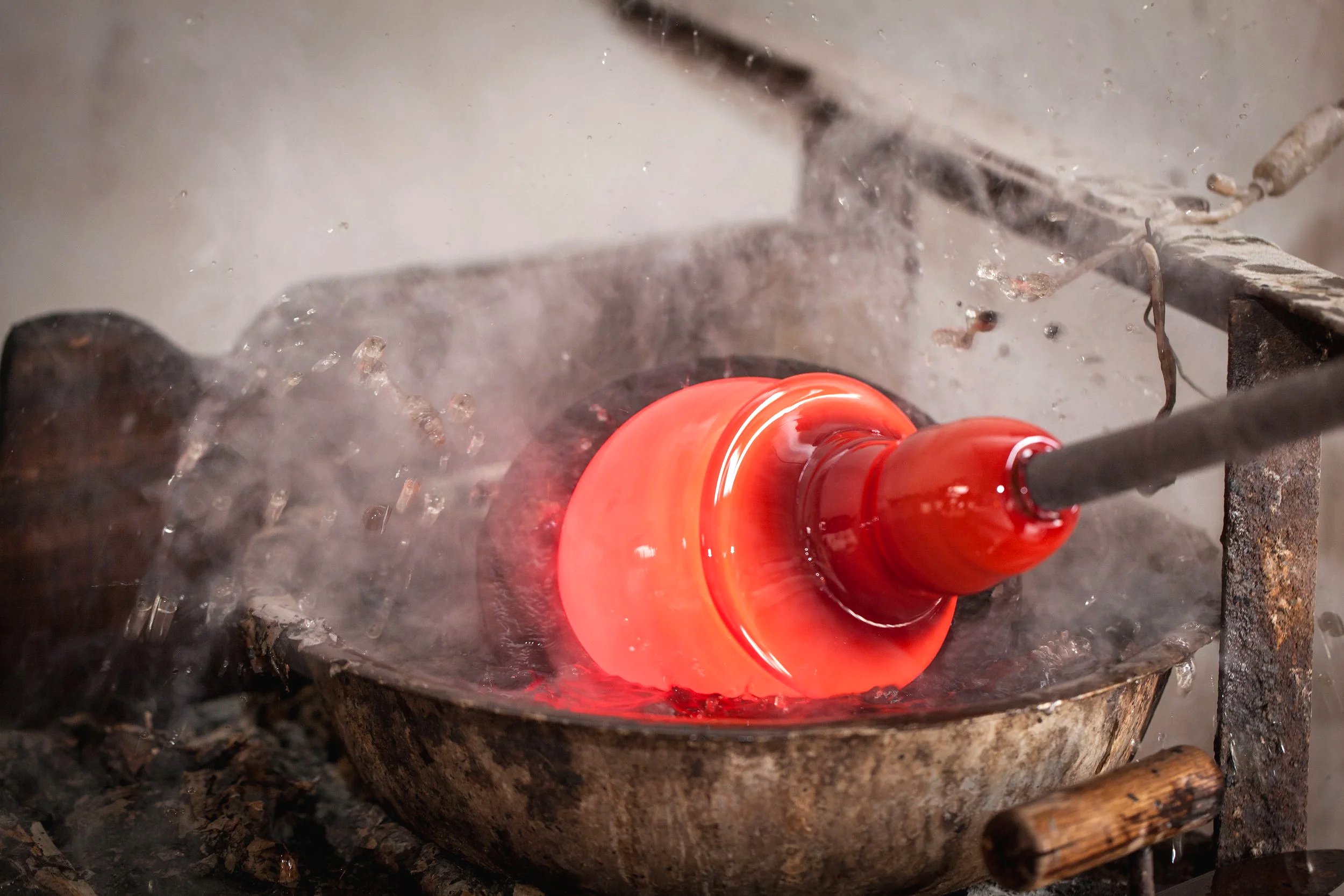
The complex process begins with a glassblower forming hollow vessels through either free-blowing or mold-blowing techniques. While the initial shape is still molten, the artisan adds sequential layers of glass—sometimes as many as six—which can be strictly monochromatic or featuring a variety of contrasting colors. Once the final form is blown, the vessel must undergo a delicate annealing process, cooling very slowly over several days in progressively cooler kilns. If allowed to cool too quickly, the thick, heavy glass will craze and crack, destroying the piece entirely.
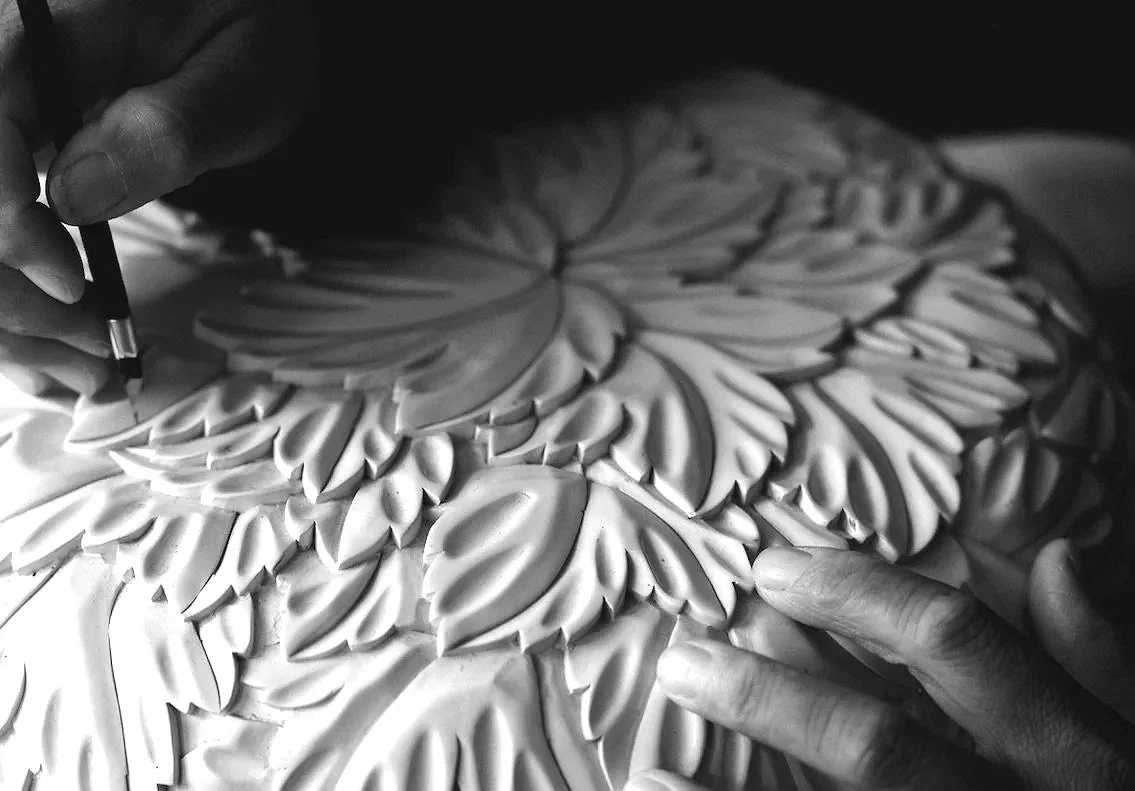
Once completely stabilized, the vessel is sent to master jade carvers who use traditional lapidary grinding and carving methods to shape, facet, and polish the piece. By precisely cutting through the outer layers, the carvers intentionally expose the vibrant, underlying glass layers, adding extraordinary surface complexity and sculptural depth. Kuo expands upon this imperial tradition by experimenting with innovative color combinations of opaque and clear glass, utilizing contemporary carving techniques to achieve a richness, surface interest, and depth of color not found in earlier historical pieces while honoring classic silhouettes.
East Asian Lacquer:
Chinese lacquer is a highly revered art form dating back to the Shang Dynasty (c. 1600–1100 B.C.), utilizing the translucent sap of the Rhus verniciflua tree indigenous to East Asia. The process is famously painstaking; the harvested sap must be boiled and meticulously strained of impurities before it can be used as a coating. Because lacquer cures exclusively in high humidity, it must be built up in remarkably thin layers, with each coat requiring a full 24 hours to dry. If applied too thickly, the top layer seals out the moisture, leaving the underlying lacquer trapped in a permanent liquid state.
Influenced by the historic carved cinnabar techniques of the Song Dynasty (960–1279), Kuo adapts this demanding craft for his modern collection. He begins by constructing a hand-hammered repoussé metal base, cleaning it, and coating it with a specialized "lacquer cement" to ensure proper adhesion. From there, he applies exactly 60 individual coats of organic lacquer—achieving a precise thickness of 1 to 2.5 millimeters—before the surface is thoroughly sanded and hand-buffed to a rich sheen. Kuo boldly evolves this ancestral tradition by introducing an innovative, contemporary color palette featuring creams and yellows, and by artfully leaving sections of the underlying, sculpted repoussé metalwork exposed.
Cloisonné:
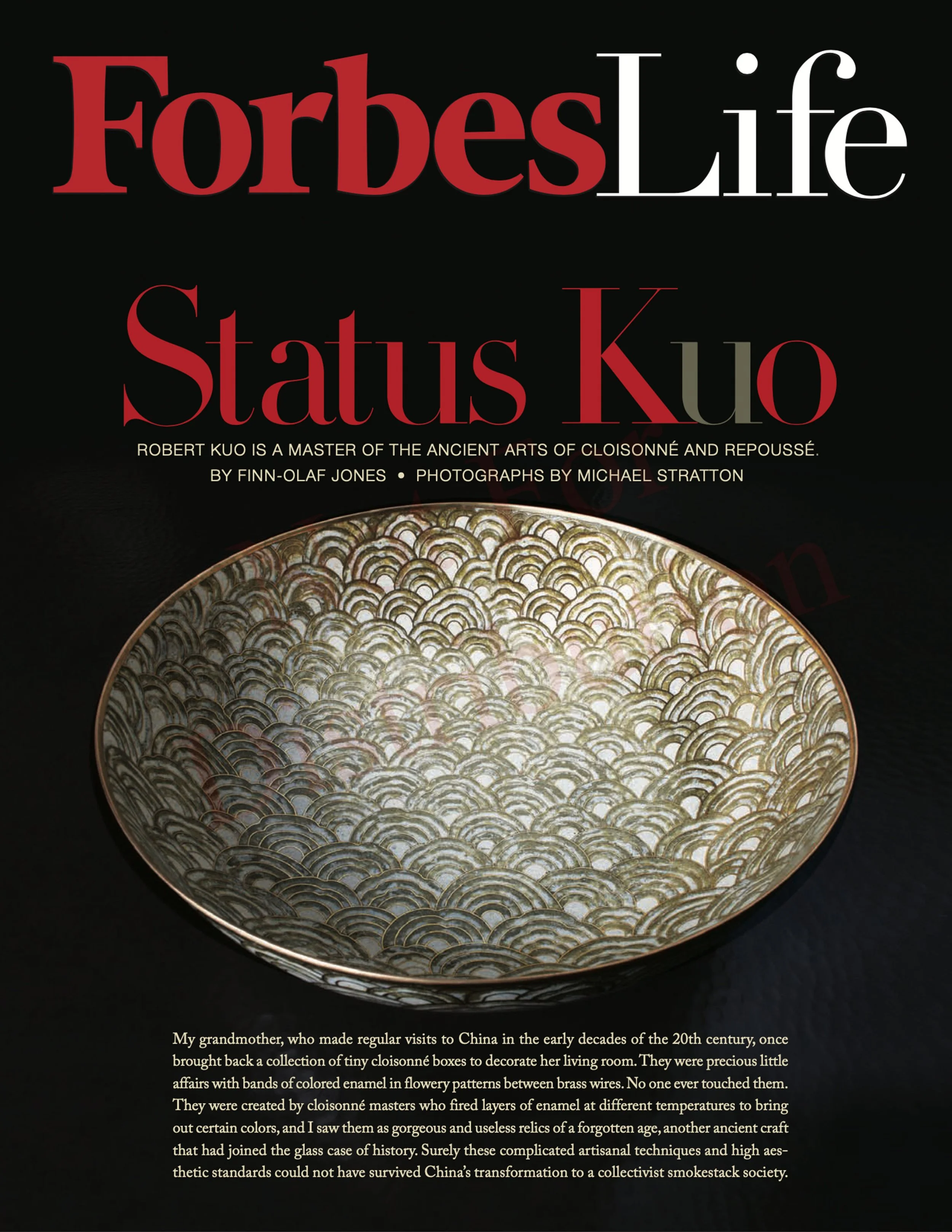
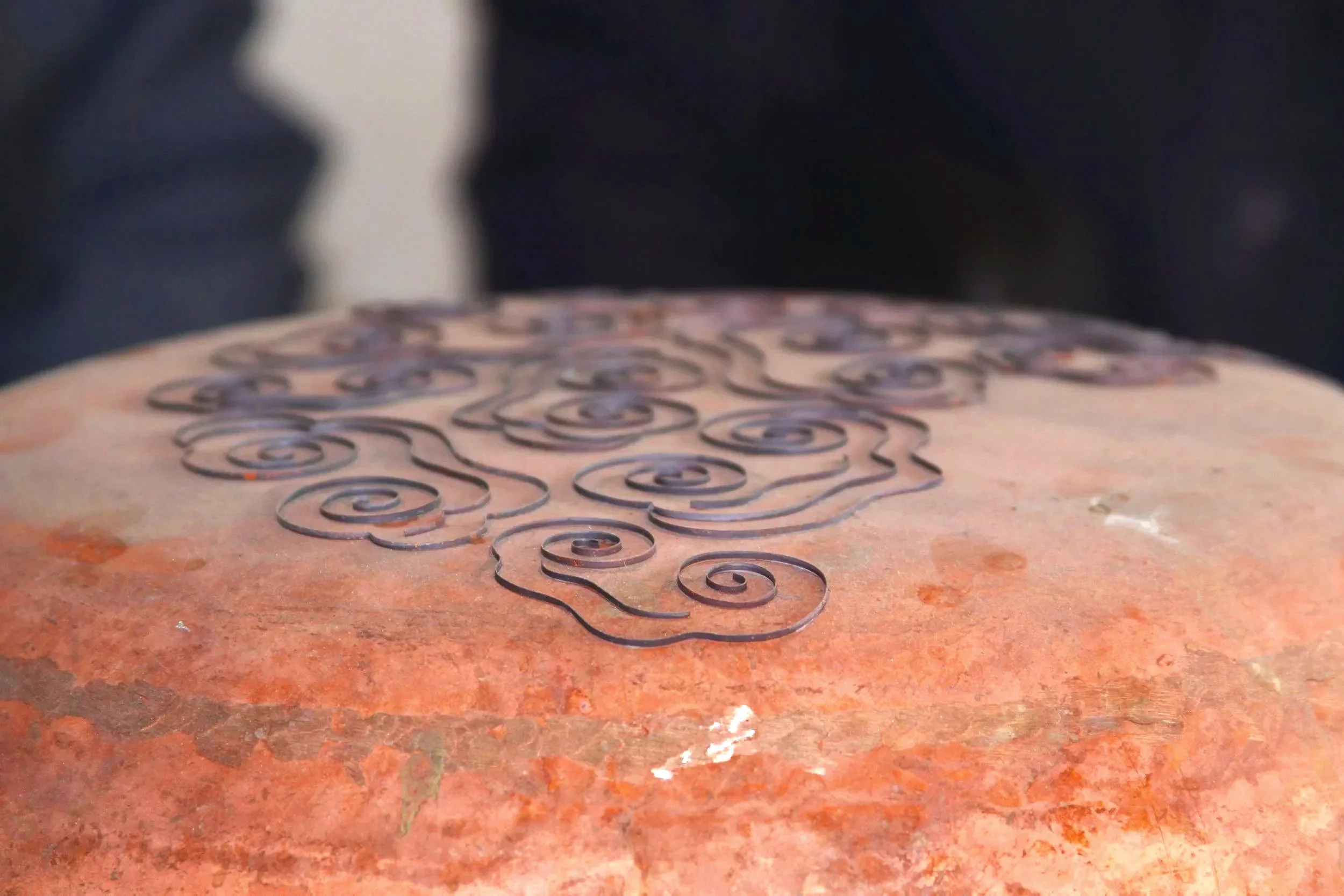
Dating back to the Byzantine Empire before reaching China in the 12th to 13th century, cloisonné is an incredibly difficult and time-consuming metal-enameling technique. The intricate process begins by soldering hand-formed copper wires onto a hammered metal base, creating a network of delicate cells called "cloisons." These cells are carefully filled with custom-mixed, heatproof enamel pastes and fired in a kiln multiple times to account for shrinkage. Once the cells are completely filled, the piece is meticulously sanded down with carborundum to flatten the surface, polished to a smooth finish, and completed with gold plating on the exposed wire details.
In the 1980s, Robert Kuo began his artistic repertoire with cloisonné, disrupting the rigid traditions of the medium by introducing fluid, flowing designs without ever compromising on technical quality. He expanded the craft's classic limits by creating and patenting an entirely new palette of matte cloisonné colors. After temporarily stepping away to explore the sculptural possibilities of the hand-hammered repoussé technique, Kuo has returned to cloisonné with a fresh perspective. Today, he elevates the ancient art form once again by experimenting with dynamic, non-monochromatic color combinations, intricate multi-layered patterns, and unprecedented, large-scale contemporary pieces.
NEWS